The catch with the SPF on the bottle
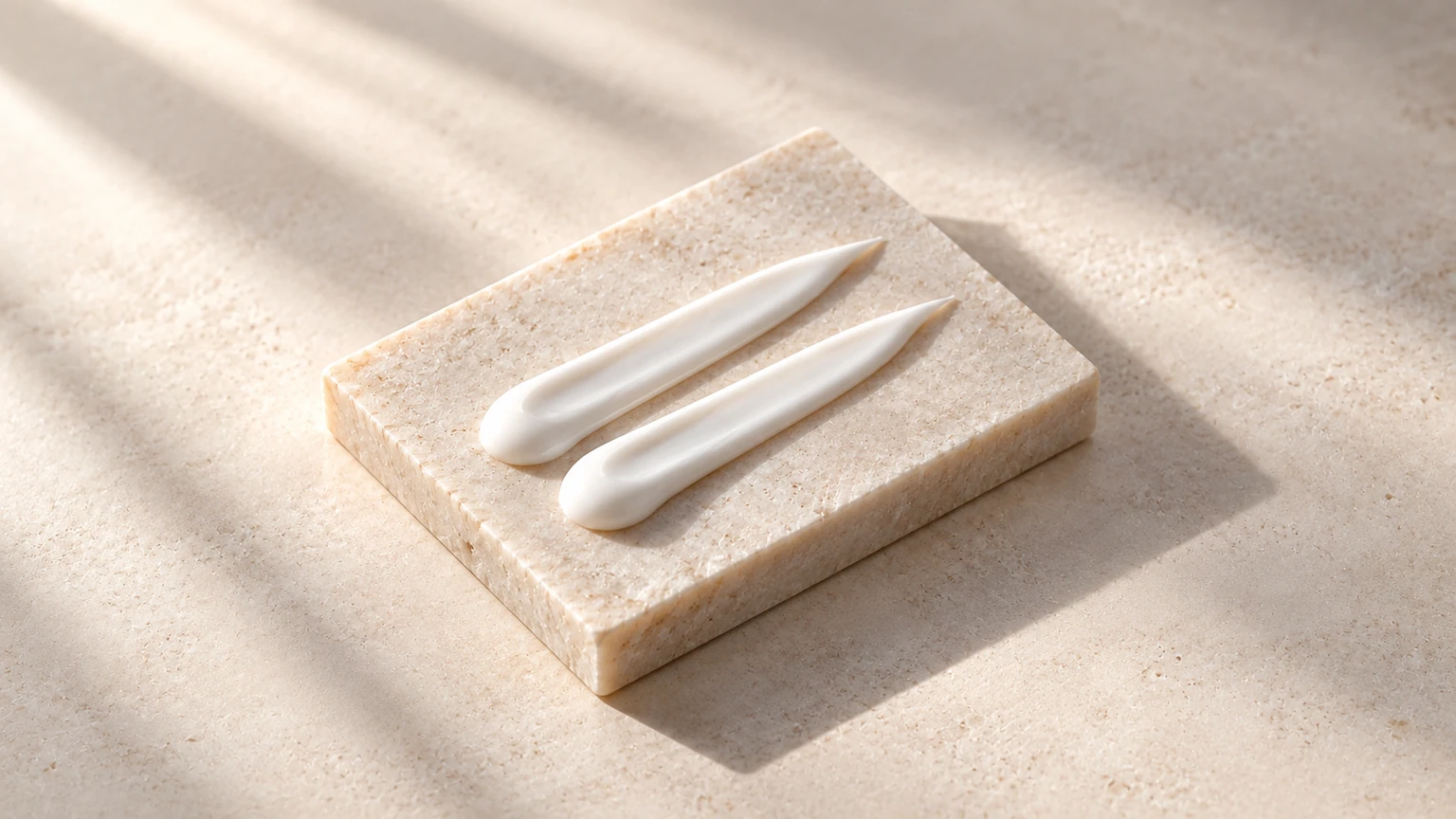
The SPF on a bottle comes from a lab test that uses a thick, even layer: 2 milligrams for every square centimeter of skin. In real life, most people put on a quarter to half of that, and a thinner layer gives you less protection than the number on the label. So how much you use matters as much as which SPF you pick.
Your morning sunscreen
- Moisturizer first, if you use one
Let it sink in for a minute.
- Two finger-lengths for your face
Squeeze a line along your index and middle fingers, dot it over your face, then spread.
- A little more for neck and ears
They’re easy to miss, and they get a lot of sun.
- Give it about 15 minutes
Put it on before you head out, not once you’re already in the sun.
Beach day? Here’s your body amount
For a day in a swimsuit, an adult body needs about a shot glass of sunscreen, which is 6 to 8 teaspoons. When you’re outside for a while, top up every 2 hours, and straight after swimming, sweating or towel drying. A sunscreen stick makes face top-ups quicker when you’re out.
Common questions
Does makeup with SPF count?
It’s a bonus, but most of us don’t wear nearly enough makeup to get the SPF on the label. Keep your sunscreen underneath and count makeup SPF as extra.
Can a higher SPF make up for using less?
A higher number helps a little when your layer comes out thin, but it doesn’t last any longer. Every SPF needs a top-up after 2 hours outside.
Sources
- How to apply sunscreenAmerican Academy of Dermatology, accessed October 18, 2026
- Sunscreen FAQsAmerican Academy of Dermatology, accessed October 18, 2026
- Sunscreen and sun safetyNHS, accessed October 18, 2026
- Application of sunscreen: theory and realityPhotodermatology, Photoimmunology & Photomedicine (Petersen B, Wulf HC), accessed October 18, 2026
Reviewed for content and safety by Nubia editorial team. Next review: January 2027.