Why spring catches people out
The sun sits higher in the sky every week from now, and UV rises with it. UV isn’t tied to how warm it feels, so a cool, breezy day can still have high UV, and it can stay high under cloud too. That’s why it’s worth checking the UV, not the temperature.
The one number to watch: 3
The UV index runs from 0 upwards. At 3 and above, the World Health Organization recommends sun protection, and at 8 and above, it suggests staying out of the midday sun. In Australia, Cancer Council recommends a broad-spectrum, water-resistant SPF 50 or 50+ whenever UV is 3 or higher.
Your 1-minute morning habit
- Sunscreen, last step
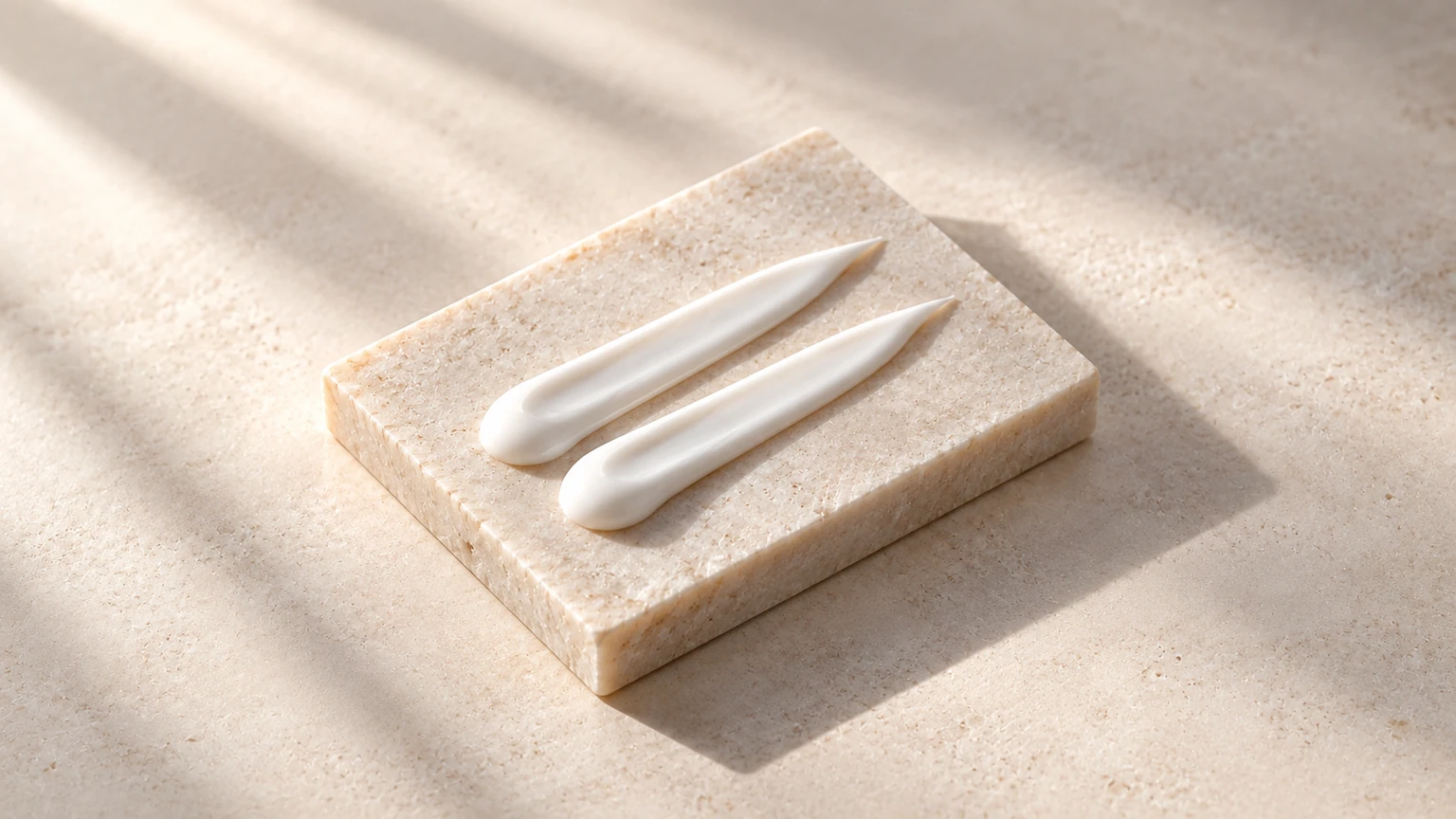
Two finger-lengths for your face, plus neck and ears.
- Give it 15 minutes
Put it on before you head out.
- Pack a top-up
A stick or small tube for days you’re out longer than 2 hours.
Common questions
Do I need sunscreen if I’m mostly indoors?
If you’ll be outside at all, yes, even for a walk or the commute. On a day spent fully indoors, you can skip it.
Is the SPF in my moisturizer enough?
It counts if you use a full two finger-lengths of it, which most people don’t. A separate sunscreen makes the amount easier to get right.
Sources
- Radiation: The ultraviolet (UV) indexWorld Health Organization, accessed October 18, 2026
- Ultraviolet radiationWorld Health Organization, accessed October 18, 2026
- All about sunscreen and sun safetyCancer Council Australia, accessed October 18, 2026
- How to apply sunscreenAmerican Academy of Dermatology, accessed October 18, 2026
- How to treat sunburnAmerican Academy of Dermatology, accessed October 18, 2026
Reviewed for content and safety by Nubia editorial team. Next review: January 2027.