Your level ups, one night at a time
Your routine starts retinol at a pace that suits your skin, usually one or two nights a week. When your check-ins say things feel comfortable, it moves up a night at a time, and you’ll see it on Routine as a little level up. If your skin reacts, a quick check-in keeps your routine simpler until it settles, and if a strong active looks like the cause, it can suggest a lighter strength.
A retinol night
- Cleanse, then let your skin dry
Retinol goes on dry skin. If it tends to sting, waiting up to 30 minutes after washing can help.
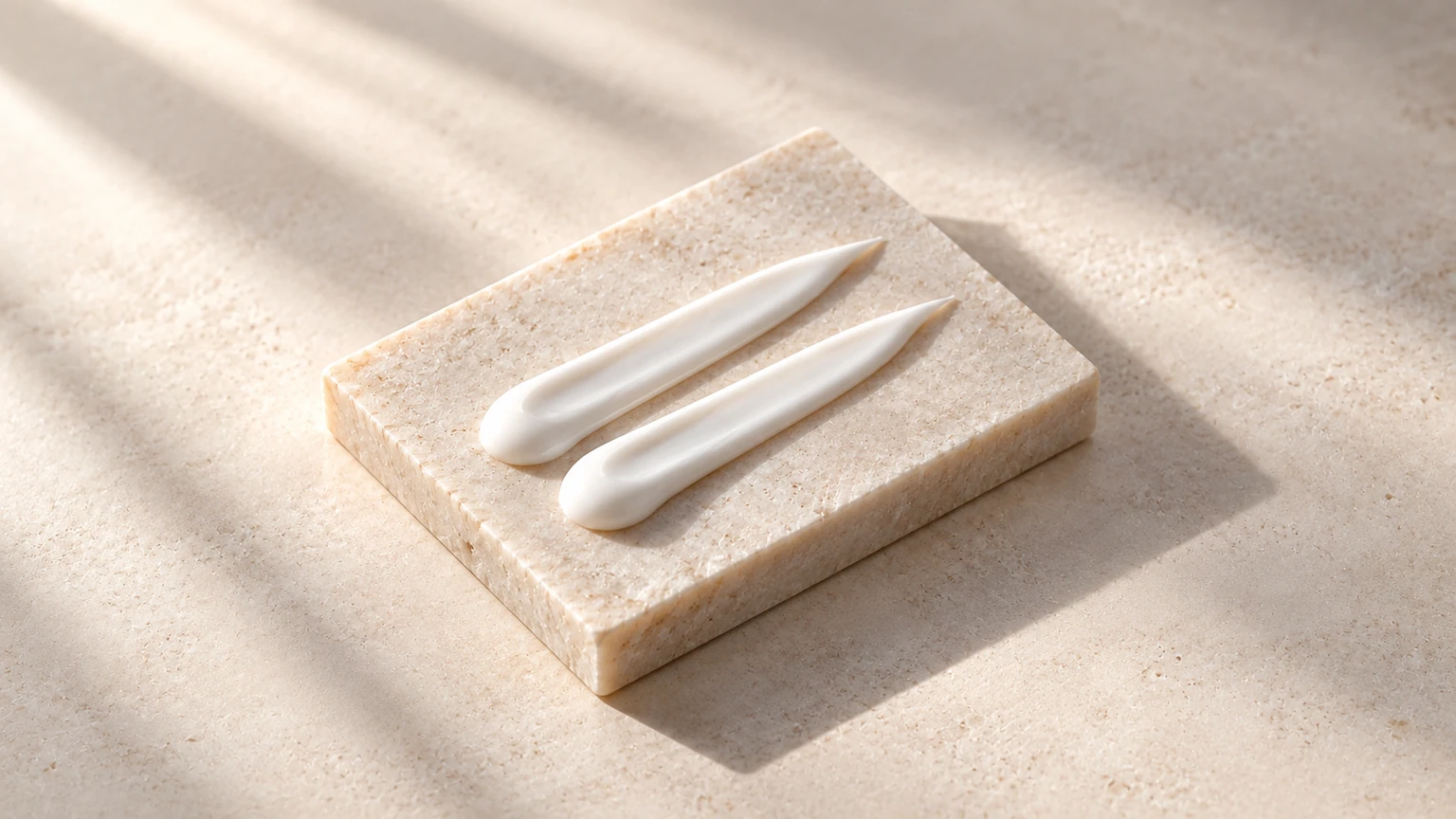
- A pea-sized amount
Dot it on forehead, cheeks and chin, then spread. Keep it away from the corners of your eyes, nose and mouth.
- Moisturizer on top
Prone to dryness? Moisturizer, then retinol, then moisturizer again works too.
- Tomorrow morning: sunscreen
Every morning, rain or shine, while retinol is in your routine.
Is this normal? Your first few weeks
Some dryness, flaking or pinkness is common in the first few weeks and usually eases as your skin gets used to it. Retinol is one of the milder retinoids, which is why it’s a good place to start. Burning, or irritation that keeps getting worse, is your cue to pause and do a check-in.
Can it share a night with other actives?
Not while you’re starting: retinol gets its own nights for now. Exfoliating on the same nights can make dryness worse, so Nubia puts strong actives on separate evenings. If something doesn’t agree with you, it’s easy to tell which one.
Common questions
Which strength should I start with?
The lowest one you can find. Retinol is already one of the milder retinoids, and a low strength gives your skin an easy start.
Is a little peeling normal?
A little flaking in the first weeks is common. If it stings, burns or keeps getting worse, pause and do a check-in.
Can I use it every night?
Some people get there, and lots of people happily stay at two or three nights. Either way, Nubia only adds a night when your check-ins say your skin’s comfortable.
Sources
- Retinoid or retinol?American Academy of Dermatology, accessed October 18, 2026
- Dermatologist-approved pregnancy skin careAmerican Academy of Dermatology, accessed October 18, 2026
- Retinoids in the treatment of skin aging: an overview of clinical efficacy and safetyClinical Interventions in Aging (Mukherjee S et al.), accessed October 18, 2026
- Why Topical Retinoids Are Mainstay of Therapy for AcneDermatology and Therapy (Leyden J, Stein-Gold L, Weiss J), accessed October 18, 2026
- What can treat large facial pores?American Academy of Dermatology, accessed October 18, 2026
- How to safely exfoliate at homeAmerican Academy of Dermatology, accessed October 18, 2026
Reviewed for content and safety by Nubia editorial team. Next review: January 2027.