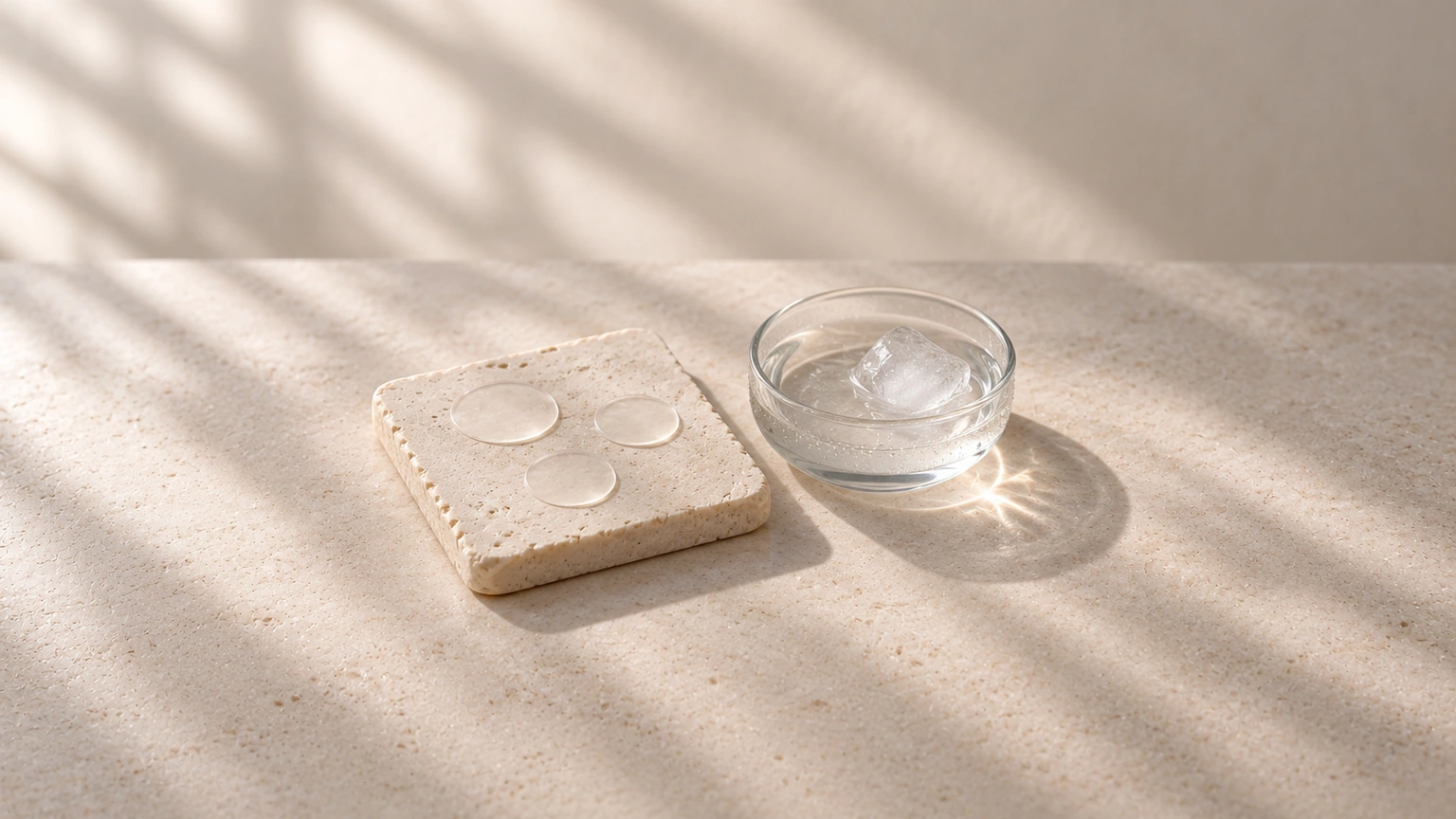
In 30 seconds
- Squeezing often pushes what’s inside deeper, so the spot gets more inflamed and takes longer to clear
- It raises your risk of infection, dark marks and permanent scars
- Most single pimples clear in under 2 weeks if you leave them alone
- Ice, a warm compress, a thin layer of treatment and a hydrocolloid patch beat your fingers
- A dermatologist can drain a big spot or inject a cyst, which usually flattens it within 48 to 72 hours
The best answer is no. The AAD’s advice is to leave popping to a dermatologist, because squeezing often pushes some of what’s inside deeper into the skin. That means more inflammation, a spot that takes longer to clear, and a higher chance of infection from the bacteria on your hands. Wanting to is completely human, so here’s the practical version: what squeezing does, what works better tonight, and what to do if it’s already done.
Is it bad to pop pimples? What happens under the skin
A pimple is a blocked, inflamed follicle, and the inflammation is the part that does the damage. Pressing from the surface pushes some of what’s inside out and, often, some of it further in, into skin that then reacts even more. The AAD lists the results as more painful acne, more noticeable acne and permanent acne scars.
Different marks can follow. On lighter skin a flat pink or red mark is common once a spot heals, and DermNet NZ notes these show most on fair skin. A flat dark spot is post-inflammatory hyperpigmentation, especially common on brown and black skin, where acne shows less redness and more change in pigment. The AAD’s estimate for a dark mark that’s only a few shades darker than the skin around it is 6 to 12 months to fade, once new spots stop forming there, while deeper, slate blue to gray discoloration can take years. Its plan for fading them starts with sunscreen before you go out, ideally a tinted one with iron oxide, which also helps protect against the visible light that can darken these marks. A scar is different: it changes the texture of your skin, not just its color, and it’s the permanent kind the AAD warns about.
Should you pop pimples when they’re white?
A white head makes a spot look ready, but it’s still a no from the AAD, for the same reason: the pressure lands on an inflamed follicle. Waiting usually works. DermNet NZ says individual acne spots usually last less than 2 weeks, though deeper bumps and nodules can stay for months. People also search for how to pop a pimple without scarring, and the honest answer is that no technique takes the risk to zero, because the problem is the pressure, not your method. A warm compress and a patch let a ready spot run its course without the squeeze.
What to do instead of popping a pimple tonight
Your spot plan
- Hands off
The first win is noticing when your hand drifts up. Every touch adds pressure and bacteria.
- Ice a sore, swollen one
Wrap ice in a clean cloth and hold it on for a few minutes at a time. The AAD suggests ice to ease the pain and swelling of big, deep spots.
- Warm compress for a deep one
Soak a clean washcloth in hot water, not hot enough to burn, and hold it on the spot for 10 to 15 minutes, three times a day, with a fresh cloth each time. That’s the AAD’s method for deep, painful pimples.
- A thin layer of treatment
Dab on a product with benzoyl peroxide, salicylic acid, adapalene or azelaic acid. Keep it thin, since the AAD warns that too much can irritate the spot even more.
- Patch it
The AAD suggests a hydrocolloid patch to protect the spot while it recovers, and it puts a barrier between the spot and your fingers.
Do pimple patches work?
Mostly yes, within limits. A hydrocolloid patch is a small gel dressing that soaks up fluid and keeps the spot covered. The research is small but encouraging: in a 2006 pilot study of 20 people with mild to moderate acne, 10 per group, a week of hydrocolloid dressings reduced redness and overall severity more than plain skin tape, and the dressing let through only 7.4% of UVB light, compared with 38% for the tape. It’s one short trial, so don’t expect miracles. Our read: since a patch works by soaking up fluid, it makes the most sense on a spot with a head or one that’s already open. On a deep lump with no head, think of it mainly as a very good fingers-off reminder.
What to do after popping a pimple
Already popped it? Do this
- Stop squeezing
Even if there seems to be more in there. Going back in only adds pressure to an open spot.
- Clean up
Wash your hands, rinse the spot with lukewarm water and a mild cleanser, and pat it dry with a clean towel. If it’s bleeding, press a clean tissue on it for a minute.
- Cover it
A hydrocolloid patch protects the open spot and keeps your fingers away while it closes up.
- Leave the scab
Let it come off on its own. Picking it reopens the spot and adds more inflammation.
- Watch it for a few days
Redness that keeps spreading, heat, swelling, pain that gets worse, or a fever or chills mean it’s time to see a doctor.
The “danger triangle”: real risk or internet myth?
The area runs from the bridge of your nose to the corners of your mouth, and the worry has a real basis. Veins there link to the cavernous sinus, a network of large veins behind your eye sockets, so an infection in that area has a short route inward. Cleveland Clinic says that in very rare cases a facial infection can lead to septic cavernous sinus thrombosis, a clot in those veins, and its dermatologist calls it relatively unlikely. Today it’s usually treatable when it’s caught in time.
Can a dermatologist drain a cyst or inject a pimple?
Using sterile instruments, a dermatologist can remove blackheads and whiteheads that haven’t cleared with other treatment, or open and drain a large pimple or painful cyst. For a single painful nodule or cyst, they can inject a corticosteroid. The AAD says that injection flattens most within 48 to 72 hours and lowers the risk of a scar, which makes it the real emergency option before a big day. If big, painful ones keep coming, book a visit. The last episode in this series covers what happens there.
Safety note: Spreading redness, heat, swelling or a fever after picking a spot, especially between your nose and mouth, needs a doctor soon.
Breakout basics
Part 2 of 50 of 5 read on this browser
 Up next · Part 3 · 7 min readSalicylic acid vs benzoyl peroxide: which one for your acne?
Free to read, no account needed. Your ticks stay in this browser until you bring them to Nubia.
Sources
- Pimple popping: Why only a dermatologist should do itAmerican Academy of Dermatology, accessed November 5, 2026
- Tips to treat a deep, painful pimpleAmerican Academy of Dermatology, accessed November 5, 2026
- How to fade dark spots in darker skin tonesAmerican Academy of Dermatology, accessed November 5, 2026
- Acne vulgarisDermNet, accessed November 5, 2026
- What Is the ‘Danger Triangle of the Face’?Cleveland Clinic, accessed November 5, 2026
- A pilot study on efficacy treatment of acne vulgaris using a new method: results of a randomized double-blind trial with Acne DressingJournal of Cosmetic Science, accessed November 5, 2026
More to read
Browse all articles
Does hard water affect your skin? What the research says for travelers
Why your skin acts up in a new city: hard water, new weather, sun at altitude and the travel-breakout suspects
Skincare on a plane: why flying dries your skin and what helps
Why your face feels tight two hours after takeoff, a short long-haul routine and the window-seat sunscreen question