In 30 seconds
- Yes, oily skin needs moisturizer too, just a lighter one: gel or lotion, oil-free, noncomedogenic
- Shine comes from oil, and your skin can be short on water at the same time
- Put it on while your skin is still a little damp after washing
- An SPF moisturizer can be your sunscreen only if you use enough and reach your eyelids
Do you need moisturizer if you have oily skin? For most people, yes. The American Academy of Dermatology’s advice for oily skin is to moisturize after cleansing anyway, with a product labeled oil-free and noncomedogenic, because oily skin still needs to stay hydrated. The trick is picking a texture that doesn’t add to the shine.
Blotting papers by 3 pm, a forehead you could check your reflection in, and someone tells you to put more on your face? It sounds backwards. It makes sense once you split oil and water into two different things.
Why does oily skin still need moisturizer?
Oil is what your skin makes. Water is what it holds. You can have plenty of the first and not enough of the second, especially after a strong cleanser, in dry air or while you’re using acne treatments. The AAD’s acne page puts it this way: when your skin becomes dry, your body makes more oil, and that extra oil can lead to more breakouts. It also notes a daily moisturizer helps skin put up with drying treatments like benzoyl peroxide, salicylic acid, adapalene and tretinoin. And a small perk, from the AAD again: people with oily skin tend to have thicker skin and fewer wrinkles.
What does a moisturizer actually do?
Most moisturizers mix three kinds of ingredients, and knowing them makes labels much easier to read. A 2017 research review on moisturizers sorts them like this.
Humectants pull water in. Glycerin, hyaluronic acid, urea and panthenol help the top layer of skin absorb and hold water, and oily skin usually loves them. Emollients fill the gaps. Fatty acids and fatty alcohols slip into the spaces between skin cells and help the surface stay hydrated. Occlusives seal it all in. Petrolatum at 5% or more cuts water loss by more than 98%, the review says, while lanolin, mineral oil and dimethicone manage 20% to 30%.
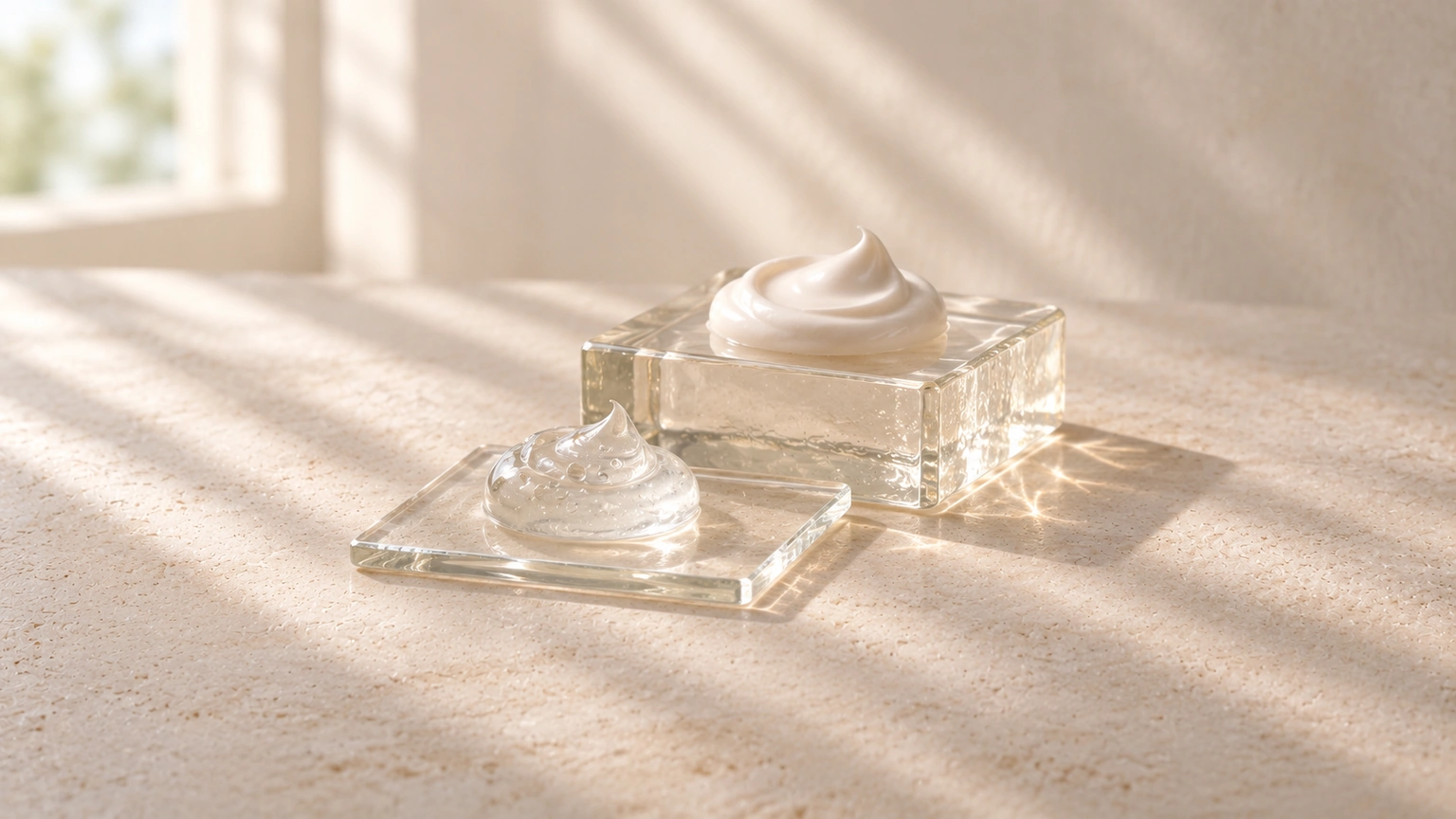
That’s why a gel for oily skin feels so different from a night cream for dry skin. The gel usually leans on humectants with a light touch of the rest. The cream carries far more emollients and occlusives.
Dry or dehydrated skin: how to tell
Dry skin makes less oil. It feels rough or tight most of the time, flakes easily and drinks up rich creams. Dehydrated is the word the beauty world uses for skin that’s low on water, and it can happen to oily skin too: shiny in the T-zone, yet tight after washing, with makeup clinging to little dry patches. It isn’t a medical diagnosis, just a useful label. If that sounds like you, you don’t need a heavier moisturizer. You need one with more humectants, a milder cleanser, and the damp-skin trick below.
Which moisturizer for your skin type?
Oily, acne-prone or combination
- Gel or gel-cream textures, or a light lotion
- Look for oil-free and noncomedogenic on the label, the AAD’s tip
- Humectants like glycerin or hyaluronic acid near the top of the list
- Combination skin: the light one all over, a little cream only on dry spots
Dry or sensitive
- A cream, which the AAD says adds more moisture than a lotion
- Petrolatum, shea butter, dimethicone or lanolin for the sealing part
- Fragrance-free rather than unscented, which the AAD says can still contain irritating chemicals
- Very dry spots at night: an ointment or balm on top
The damp-skin trick, and the skin flooding trend
Leave your face a little damp after washing, then put moisturizer straight on. The AAD suggests exactly this, since it helps trap water in your skin, and the 2017 review notes occlusives work best on dampened skin. It’s free, it takes no extra time, and it makes a light gel feel like it’s doing more.
Skin flooding, the social media version, takes the same idea further: a mist or watery toner, a humectant serum, then moisturizer, all on damp skin. Our verdict: real science, new name. It’s genuinely good for dry or dehydrated skin. For oily skin, two light layers usually do the job, and every extra layer is one more thing that can pill. On retinoid nights, keep the retinoid itself off damp skin. The AAD suggests putting it on 20 to 30 minutes after you wash, and your hydrating layers go over it.
Moisturizer with SPF: when does it count as sunscreen?
The AAD suggests a moisturizer with broad-spectrum SPF 30 or higher for oily skin, which saves a step. The catch is how we apply it. In a 2019 study, 84 people put on an SPF 30 sunscreen on one visit and an SPF 30 moisturizer on another, and a UV camera showed where it went. With the moisturizer they missed 16.6% of their face, against 11.1% with sunscreen, and 20.9% of the eyelid area, against 14.0%. Nobody noticed the gaps. The researchers think people simply used less of the thicker moisturizer.
So an SPF moisturizer counts on a desk day if you use as much as you would of a sunscreen and take it right up to your lashes. Spending real time outside when the UV is 3 or higher? Use a proper sunscreen. Oily skin can also flip this around: a light, moisturizing sunscreen can be your only morning layer if your skin feels comfortable with it.
Skin changes with the weather, too. Nubia’s Seasonal care moves your routine to richer steps when it turns cold where you are, and back to lighter ones when it warms up.
Common questions
Can moisturizer cause acne?
The wrong one can. That’s why the AAD steers acne-prone skin toward products labeled oil-free, noncomedogenic or won’t clog pores. If you break out after a new moisturizer, stop it and go back to what worked.
How much moisturizer should I use?
There’s no official amount for the face. Start with a fingertip’s worth for face and neck, add a little more if you still feel tight, and use less if it feels sticky or rolls into little balls.
Do I need moisturizer after a serum?
Usually, yes. A hydrating serum adds water, and the moisturizer on top helps keep it there. Very oily skin in humid weather can sometimes get away with the serum alone, so go by how your face feels a few hours later.
Safety note: If a moisturizer stings or burns every time, or you get a rash, stop using it. If your skin doesn’t clear up once you’ve stopped, check with a pharmacist or dermatologist.
Skincare basics
Part 4 of 80 of 8 read on this browser
 Up next · Part 5 · 6 min readDo you need sunscreen every day? Indoors, clouds and winter
Free to read, no account needed. Your ticks stay in this browser until you bring them to Nubia.
Sources
- How to control oily skinAmerican Academy of Dermatology, accessed November 5, 2026
- Moisturizer: Why you may need it if you have acneAmerican Academy of Dermatology, accessed November 5, 2026
- Dermatologists' top tips for relieving dry skinAmerican Academy of Dermatology, accessed November 5, 2026
- The Role of Moisturizers in Addressing Various Kinds of Dermatitis: A ReviewClinical Medicine & Research (Purnamawati S et al.), accessed November 5, 2026
- Application of SPF moisturisers is inferior to sunscreens in coverage of facial and eyelid regionsPLOS ONE (Lourenco EAJ et al.), accessed November 5, 2026
- Dermatologist-recommended skin care for your 20sAmerican Academy of Dermatology, accessed November 5, 2026
More to read
Browse all articles
What are actives in skincare? What they do and what not to mix
Retinoids, acids, vitamin C, benzoyl peroxide: what counts as an active, what each one’s for, which pairs to keep apart, and why one at a time wins.
Can your skin type change? What shifts, what stays, how to tell
Oily at 16, flaky every January, shiny but tight at 35? Why skin types shift, dry vs dehydrated, and a 30-minute check you can trust.