In 30 seconds
- Makeup brushes: wash them every 7 to 10 days, the American Academy of Dermatology’s number
- Washcloths and face towels: a fresh one at least a couple of times a week
- Pillowcases: weekly is a nice habit, but no study shows it prevents acne
- Hands: about 20 seconds with soap before your routine, and keep fingers out of jars
Short version: wash makeup brushes every 7 to 10 days, swap washcloths and face towels at least a couple of times a week, and change your pillowcase weekly if that suits you. Wash your hands before any of it. That’s the whole hygiene map of a skincare routine, and none of it needs to be fussy.
Why bother? When researchers at Aston University in the UK tested 467 used lipsticks, lip glosses, eyeliners, mascaras and makeup sponges, about 79% to 90% of them carried bacteria, including E. coli and Staphylococcus aureus. The sponges were the worst by far: 93% had never been cleaned, and 64% had been dropped on the floor and used anyway. Nothing to panic about, just a good reason to wash what touches your face.
Your cleaning cheat sheet
Every few days to every week
- Washcloths and face towels: at least a couple of times a week
- Makeup brushes: every 7 to 10 days
- Bath and hand towels: at least once a week
- Pillowcase: weekly, or sooner if it looks greasy
Every time, or every few months
- Hands: about 20 seconds with soap before skincare
- Jars: a clean spatula or clean, dry fingers, then lid on
- Makeup sponges: rinse after use, replace a torn or dropped one
- Mascara: replace it 2 to 4 months after you buy it
How often should you clean makeup brushes and sponges?
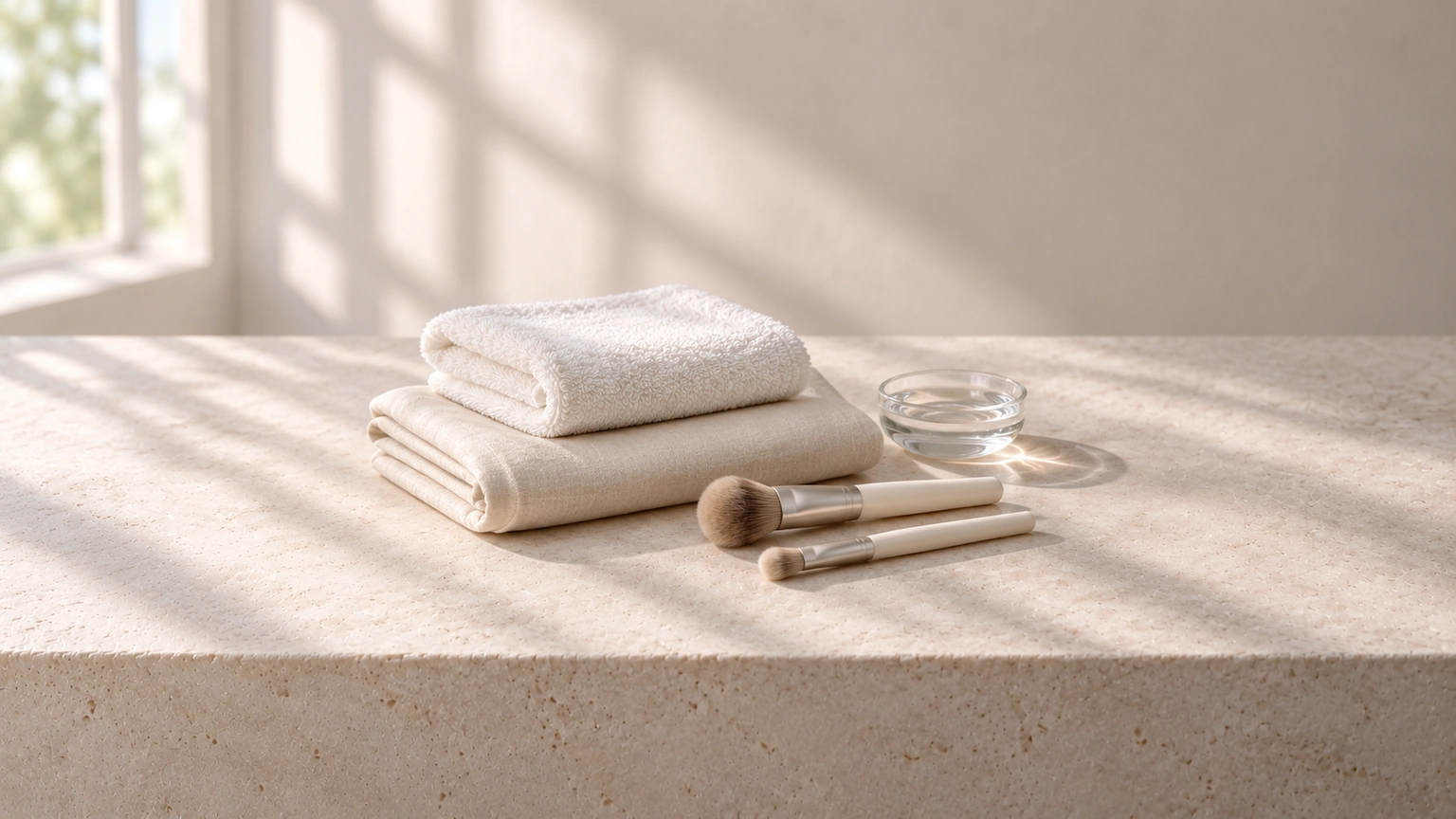
The AAD’s advice is every 7 to 10 days. Brushes collect leftover makeup, oil and bacteria, and the AAD links dirty ones to breakouts, rashes and skin infections. Its method: rinse the tips under lukewarm water, swirl them in a bowl of lukewarm water with a tablespoon of shampoo, and rinse until the water runs clear. Squeeze them out in a paper towel, then lay them flat on a towel with the tips hanging over the edge of the counter. Drying them upright in a cup lets water run down into the glue that holds the head on.
Sponges are the tricky ones, because a sponge you use with liquid foundation stays damp, and damp is where microbes hang on longest. Rinse yours after you use it if you can, let it dry in the open air instead of a closed bag, and replace it once it tears or takes a trip across the bathroom floor.
How often should you wash your face towel?
A Cleveland Clinic dermatologist suggests a fresh washcloth at least a couple of times a week, and washing bath and hand towels at least once a week. The longer a towel stays damp, he explains, the longer yeasts, bacteria and molds stay alive on it. So hang yours spread out over a bar instead of bunched on a hook, and wash towels two or three times a week if your bathroom stays humid.
Be stricter if you have eczema, since the same article notes dirty towels can make it flare. A small towel that’s only for your face, swapped every two or three days, keeps it simple.
How often should you change your pillowcase for acne?
This is the one where the advice ran ahead of the evidence. In 2023, two dermatologists from the University of Texas at Austin searched PubMed, Embase and the Cochrane Library for studies linking bedding to acne, and found none. They had spotted a 2021 AAD social media post saying weekly sheet and pillowcase changes prevent acne, and their letter reports that the AAD took it down after they raised the point.
Their worry was practical: laundry costs time and money that could go on treatments that are proven to work. So, the honest version. A weekly pillowcase change is good hygiene. Swapping sooner makes sense if your hair products or a thick night balm leave it greasy. But a fresh pillowcase isn’t an acne treatment, and if breakouts keep coming back, a proven acne product or a dermatologist will do far more than extra laundry.
Do you need to wash your hands before skincare?
Yes, and it takes about 20 seconds. The NHS times a proper hand wash at two rounds of Happy Birthday, and suggests taking off rings and bracelets first if you can. Dry your hands completely afterward. We couldn’t find a study that tests hand washing before skincare on its own, but the logic holds up: a routine is a few minutes of rubbing your hands over your face on purpose, and on the way they touch jars, pump nozzles and dropper tips.
No sink nearby? The NHS suggests an alcohol-based hand sanitizer when soap and water aren’t around, which is handy before a midday sunscreen top-up. You don’t need to wash your face again before you reapply.
Jars, pumps or tubes: which stays cleaner?
Pumps and tubes keep your fingers out of the product, so they’re the easy win. Jars are fine too, but every dip adds whatever’s on your fingers, and the FDA notes that preservatives break down over time, which is when bacteria and fungi get their chance. Use a clean spatula or a clean, dry finger, and put the lid back on. Heat matters too: the FDA’s advice is to keep products out of hot places, like a car in summer.
Is it OK to share skincare and makeup?
Keep anything that touches your eyes or lips to yourself. The FDA puts it bluntly: don’t share makeup, because you may be sharing an infection. Eye products are the riskiest, so the FDA says manufacturers usually advise replacing mascara 2 to 4 months after you buy it, and never reviving a dried one with water or saliva. Brushes stay yours too, the AAD says. A pump bottle of moisturizer shared by two people with clean hands is a different story.
Quick answers
How long does skincare last once it’s open?
In the US no law sets a shelf life for cosmetics, the FDA says, but products sold as drugs must carry an expiration date. The small open-jar symbol with a number like 12M means use within 12 months of opening. Changed color or texture? It’s done, whatever the label says.
Should I clean my phone screen for my skin?
Phone screens and breakouts haven’t been tested head to head in any study we could find. A phone does spend a lot of time pressed to your cheek on long calls, though, so a wipe with a screen-safe cleaning wipe now and then costs you nothing.
Safety note: Red, sore or sticky eyes after using mascara or eyeliner can be an infection. Stop using the product, throw it away and see a pharmacist or doctor. Get help urgently if your eye hurts or your vision changes.
Skincare basics
Part 1 of 80 of 8 read on this browser
 Up next · Part 2 · 7 min readHow to wash your face properly, and how often you really need to
Free to read, no account needed. Your ticks stay in this browser until you bring them to Nubia.
Sources
- How to clean your makeup brushesAmerican Academy of Dermatology, accessed November 5, 2026
- Microbiological study of used cosmetic products: highlighting possible impact on consumer healthJournal of Applied Microbiology (Bashir A, Lambert P), via Aston University, accessed November 5, 2026
- How Often Should You Wash Your Bath Towels?Cleveland Clinic, accessed November 5, 2026
- Does acne equal #dirtylaundry? Social media versus evidence-based medicineDermatology Online Journal (Haller CN, Diven DG), accessed November 5, 2026
- How to wash your handsNHS, accessed November 5, 2026
- Shelf Life and Expiration Dating of CosmeticsUS Food and Drug Administration, accessed November 5, 2026
More to read
Browse all articles
How to read skincare labels: ingredient lists, claims and dates
The front is the pitch, the back is the facts. Read an ingredient list, find the 1% line, decode 12M, and spot the claims with no legal meaning.
Seasonal skincare routine: what to change from summer to winter
Same face, different weather. What to swap in winter and summer, how to handle the switch in spring and fall, and the core that never changes.